
Form Trace: A Children's Shape Activity
Opens in a play window — no download required.
Reviews
Form Trace is a straightforward educational activity for early learners. Its strengths lie in its simplicity: no downloads, no ads, no time pressure, and supportive cues when a child strays from the dotted line. The repetitive tracing of basic shapes supports muscle memory and spatial awareness, which can help with early writing. The main limitation is its narrow scope—it focuses solely on shape tracing and does not offer broader curriculum content. It is best suited for parents and preschool teachers seeking a safe, focused tool for children aged three and up.
Description
Tracing Shapes with Guided Paths
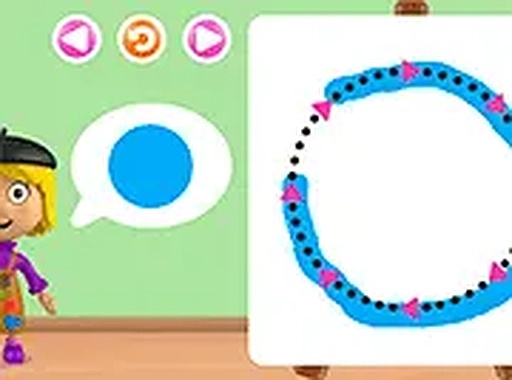
Form Trace presents children with basic geometric shapes: circles, squares, triangles, and rectangles. Each shape appears as a dotted outline that shows exactly where to move a finger or cursor. Visual markers along the line act as gentle hints, helping even very young players stay on track. The activity turns shape recognition into a hands-on exercise that feels like play rather than instruction.
Supportive Feedback and Controls
The interface responds smoothly to touch or mouse input, which suits small hands. When a child drifts away from the dotted line, the game offers supportive cues instead of penalties, letting them correct their path naturally. There is no time limit or scoring pressure, so every attempt is a fresh opportunity to practice. Completing a shape triggers a brief animation that reinforces a sense of accomplishment.
Designed for Safe, Independent Use
Form Trace runs directly in a web browser without downloads or installations. The environment contains no advertisements, external links, or distracting content. Its colorful, uncluttered layout is intentionally simple so that children as young as three can navigate independently. This makes it a practical choice for quiet time at home or structured learning in preschool settings.
Building Skills Through Repetition
Repeated tracing of the same shapes helps children develop muscle memory and spatial awareness. Each session reinforces the connection between visual recognition and physical movement, which supports early writing readiness. Parents and teachers can encourage children to try each shape several times, gradually increasing speed and accuracy. The game's patient, low-stakes approach keeps learning positive.
Compatibility
FAQ
Comments
Sign in to leave a note
You must be logged in before posting a review or rating.
No comments yet. Be the first to comment!

Editorial Notes