
Holiday Number Mosaic
Opens in a play window — no download required.
Reviews
Holiday Number Mosaic works best for players who want low-pressure math practice wrapped in a visual goal. The gradual difficulty curve supports beginners, while the absence of timers keeps sessions relaxed. Its main limitation is that the core loop stays consistent throughout, so players seeking varied mechanics may find it repetitive. Still, the picture-reveal reward gives each equation a clear purpose.
Description
Solving Equations to Reveal the Scene
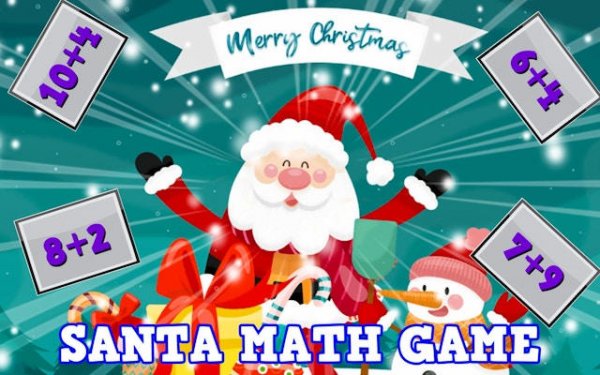
Holiday Number Mosaic presents a grid of blank tiles, each concealing part of a larger festive illustration. Players solve simple arithmetic problems, and each correct answer locks a numbered block into its matching tile. The picture emerges only as equations are completed, so every calculation contributes directly to a visible goal rather than feeling like a disconnected drill.
How Difficulty Ramps Up
Early puzzles rely on straightforward addition and subtraction. As players advance, more complex combinations appear, though the game never forces a pace. There is no timer or penalty for mistakes, and earlier puzzles can be revisited to improve speed. This structure lets beginners build confidence while giving experienced solvers room to push their mental math.
Visual Rewards and Calm Presentation
Completed puzzles reveal cheerful seasonal scenes, from snow-covered landscapes to friendly holiday characters. The clean, colorful art keeps attention on the numbers without overwhelming the screen. Because the reward is the image itself, the game turns each solved equation into a small, tangible victory rather than an abstract score.
Controls and Accessibility
Players drag numbered blocks from a side panel onto the correct answer tile using a mouse or touch input. The responsive layout works on desktops, tablets, and phones, so short breaks and longer sessions are both practical. No reading is required beyond basic numbers, which makes the game usable for early learners and non-native English speakers.
Playing Together or Alone
The non-competitive structure encourages shared play. Parents can sit with children to guide them through tougher problems, or siblings can take turns solving puzzles. There is no pressure to perform quickly, only the gentle satisfaction of completing each mosaic, making it a calm activity for holiday gatherings or quiet afternoons.
Compatibility
FAQ
Comments
Sign in to leave a note
You must be logged in before posting a review or rating.
No comments yet. Be the first to comment!



Editorial Notes