

Precision Track Runner
Opens in a play window — no download required.
Reviews
Precision Track Runner succeeds by removing everything unnecessary. The single-input control scheme and procedurally generated track keep each run fresh, while the minimalist presentation directs attention to the obstacles themselves. It suits players who enjoy chasing personal bests and refining their timing. The lack of unlocks or modes may limit long-term appeal for those who need extrinsic rewards, but the core loop is tightly executed and genuinely demanding.
Description
A Single-Button Challenge
Precision Track Runner strips the arcade formula down to one essential action: keep the ball moving forward without hitting anything. A click, tap, or spacebar press changes the ball's direction or makes it jump. That's the entire control scheme. The track is a continuous, procedurally generated path, so every run presents a new sequence of obstacles. Success depends on reading the track ahead and making split-second decisions. There are no power-ups, no combo meters, and no upgrade systems. The design is deliberately uncluttered, which means your personal best is the only score that matters.
Clarity Over Spectacle
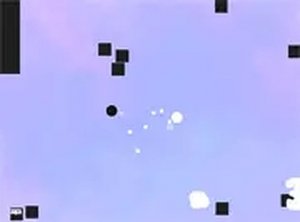
The visuals are clean and minimalist. Obstacles and track segments use clear, distinct shapes against a neutral background, so hazards are easy to identify at a glance. Nothing animates unnecessarily, and there are no busy background elements competing for attention. The audio design reinforces this focus: subtle tones signal successful passes, while a distinct sound marks the end of a run. These cues help you stay locked into the rhythm of the track, maintaining the concentration needed to react as obstacle frequency increases.
Progression Through Repetition
There are no levels to unlock or characters to upgrade. Progress is measured by distance covered and obstacles avoided. Because the track is procedurally generated, no two runs play out the same way, which gives the game near-infinite replay value. The core loop is simple: attempt a run, fail, learn from the mistake, and try again. That cycle of self-improvement—seeing your best distance and pushing past it—is the primary motivation. Players who enjoy chasing personal records rather than completing scripted content will find the structure rewarding.
Timing, Not Twitch Reflexes
Inputs register instantly, with no perceptible lag. That responsiveness matters because obstacles demand precise timing rather than frantic button mashing. The game is built for desktop play, where a keyboard and mouse offer the precision needed for tight sequences. The low barrier to entry means anyone can start playing within seconds, but the high skill ceiling keeps experienced players engaged. Navigating complex obstacle patterns requires practice, pattern recognition, and the ability to stay calm as the track speeds up.
Approaches That Help
Improvement comes from consistency, not luck. One effective habit is to focus on the space immediately ahead of the ball rather than scanning the distant track. This makes it easier to react to obstacles as they appear. Another is to use small, controlled inputs instead of large, panicked movements. Over time, you begin to anticipate the rhythm of obstacle placement. Short breaks between attempts can also help maintain concentration. Treat each run as a learning opportunity—note where you failed and adjust your timing on the next attempt.
✅ Compatibility & Testing
FAQ
Comments
Sign in to leave a note
You must be logged in before posting a review or rating.
No comments yet. Be the first to comment!

Editorial Notes