
Sand Block Puzzle
Opens in a play window — no download required.
Reviews
Sand Block Puzzle sticks to classic block-stacking rules but adds a sand transformation that makes each landing feel tactile and relaxed. The controls are minimal—arrow keys or touch—and a next-block preview supports planning. It suits players who want a gentle challenge without downloads or cost. The main limitation is that the sand effect is visual; the underlying mechanics remain traditional, so anyone seeking a radical reinvention may find it familiar.
Description
Falling Blocks, Settling Sand
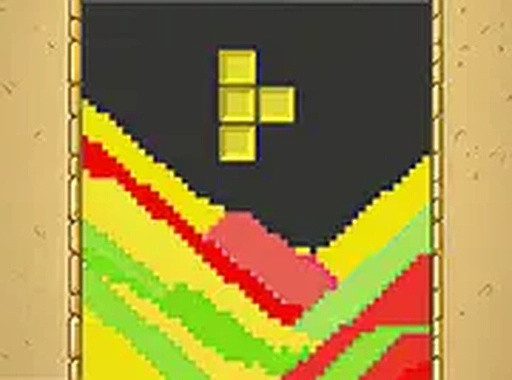
Sand Block Puzzle takes the familiar block-stacking formula and gives it a tactile twist: every block that lands dissolves into a pile of sand. That visual shift does more than look nice. It turns each placement into a small, satisfying event, reinforcing the weight of your decision. The objective stays classic—fit falling shapes into complete horizontal lines. When a line fills, it vanishes and adds to your score. The run continues until the stack reaches the top of the screen.
Controls That Stay Out of the Way
On desktop, the arrow keys handle everything. Left and right move the active block, the up arrow rotates it, and the down arrow drops it faster. Mobile players get touch controls: tap and drag to position and release to drop. A next-block preview sits on screen, so you can think one move ahead. The input scheme is deliberately simple, which keeps attention on placement rather than on fighting the interface.
Why the Sand Matters
Most block-stacking games rely on speed and precision alone. Here, the sand effect adds a layer of visual feedback that makes even a routine drop feel deliberate. It also softens the usual tension—the game stays calm even as the stack grows. That combination of familiar rules and gentle presentation makes it easy to start but still demanding to master. [IMG_1]
Approaching Higher Scores
Efficient play comes down to a few habits. Keep the stack as flat as possible to avoid trapping gaps. Use the preview to plan where the next piece will fit before you commit the current one. When you are confident about a placement, the down arrow speeds things up without sacrificing control. Rotating blocks into tight spaces early prevents problems later. Short sessions tend to work better than marathon runs, since focus matters more than raw speed.
Compatibility
FAQ
Comments
Sign in to leave a note
You must be logged in before posting a review or rating.
No comments yet. Be the first to comment!
Editorial Notes